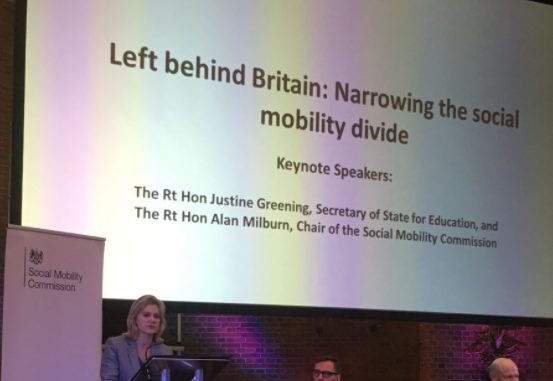
As someone with an interest in learning and social mobility I read the new research conducted by the London School of Economics for the Social Mobility and Child Poverty Commission with great interest. The report rightly highlights the differences that exist between how children from wealthy backgrounds are educated versus those from less supportive backgrounds. It concludes with the insight that the way in which wealthier parents encourage their children to develop – through building soft skills, encouraging them to broaden their approaches to learning and build professional connections are creating a ‘glass floor’ that effectively protects them from downward mobility.
What’s more the report picks out recent changes in our workforce needs have disrupted the traditional workplace maxim that you can ‘start at the bottom’ and ‘work your way to the top:
Growth in demand for high skilled workers slowed and some commentators worried about a growing polarisation in the labour market which made it difficult, perhaps increasingly so, for workers starting in relatively low skilled jobs to climb the career ladder
So in effect, what this points to is the need to prepare more people for more skilled positions. Even though the report suggests that the ‘room at the top’ is growing only slowly, I’d suggest that the room near the top is actually growing a lot faster than we are aware. Since 2015 when the report was compiled, business group EEF came out in 2016 saying that the UK’s manufacturing industry was crying out for skilled workers. Earlier this year, Tech City’s need to grant more visas to access the world’s best tech talent begs the question: why are we not doing more to nurture it here?
The challenge that governments are facing is plain to see: our working world is changing at breakneck speed; you can invest resources planning, commissioning and publishing research on social mobility, only to find out that the world has moved on. The Social Mobility Commission’s board needs to have much more representation from fast-moving industries that are crying out for skilled workers, so they can provide more ‘up to the moment’ insights on how to drive inclusion for people of all backgrounds in a more agile way.
When I looked at the measures that parents were taking to protect their young from downward mobility, another need became clear to me: providing soft skills like resilience and ‘polish’, supporting people in developing business skills that they can put to good use in a career or in entrepreneurship are skills that we should be teaching everyone. Literally everyone. Given that teachers have more than enough on their plates, how could this happen?
This is where the private sector needs to step in: it needs the workers, so it only makes sense that they fund the initiatives to develop young people. What does this look like? Funding initiatives that ensure long-term, consistent contact with young people and that help them
- Understand more about today’s (and tomorrow’s) industry needs
- Develop soft skills and confidence,
- Help them build professional networks
- Provide mentoring
I say this as a Trustee for Villiers Park Educational Trust, which does exactly that. Short term ‘inspiration days’ or week long courses on their own may provide the spark for a young person that is not from a wealthy background to follow a skilled career path, but it won’t fan the flame; ongoing support (where parents cannot provide it) makes all the difference between people excelling based on their natural talent, coupled with ‘soft’ skills. In a world where machine learning is removing low-level cognitive tasks from the human workplace, careers that rely heavily on leadership, influencing skills, resilience and creativity are what will be needed in the future. Justine Greening is right to say we can’t let the UK’s talent go to waste. Let’s re-engineer the way we educate people now to address this.